Shop IontoPatch™
IontoPatch™ provides pain-free, extended, time-released transdermal drug delivery.
Physiotherapy Equipment & Supplies for Clinics & Home Use | Free U.S. Shipping
Have Questions? Contact Us
IontoPatch™ provides pain-free, extended, time-released transdermal drug delivery.




















IontoPatch™ provides pain-free, extended, time-released transdermal drug delivery.
Same-day shipping on orders placed before noon.
We offer competitive pricing on all products.
lontoPatch™ provides pain-free, extended, time-released transdermal drug delivery.
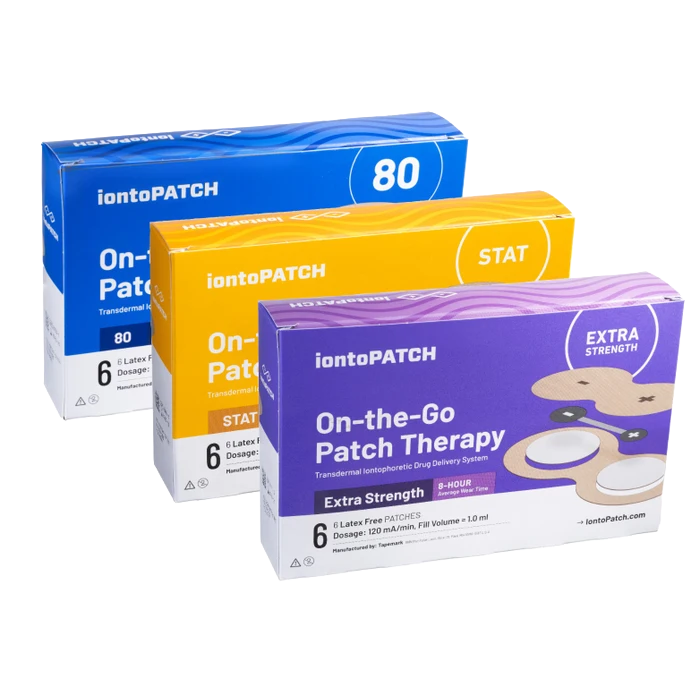
IontoPatch™ STAT is a self-contained, wearable iontophoresis patch built for faster delivery—commonly described as completing treatment in a ~4-hour average wear time while delivering an 80 mA-min dose strength.
Providing quality therapeutic products for healthcare professionals since 1984.

We offer competitive pricing on all products.

Same-day shipping on orders placed before 1p Central Time.

Extensive inventory ready to ship when you need it.

Providing personalized service since 1984.
Providing quality therapeutic products for healthcare professionals since 1984.
“Good Quality and Easy to Use”

Balego® TENS/NMES/FES Electrodes | Made in USA Reusable Hydrogel Pads, 4/package
Shop now“Comfortable and Easy to Wear”

IontoPatch STAT, 80 & Extra Strength | 6 Kits
Shop now“Excellent Muscle Recovery Tool”

Balego® EMS Digital NMES Stimulator | Portable Dual-Channel Muscle Stimulator
Shop now“Great Alternative to Clinic Sessions”
IontoPatch STAT, 80 & Extra Strength | 6 Kits
Shop now“Works Well and Comfortable”
IontoPatch STAT, 80 & Extra Strength | 6 Kits
Shop now
The iStim EV-805 is unusual among portable TENS/EMS devices because four independently controlled channels, multiple stimulation modes, and two timer groups create more troubleshooting possibilities than a basic two-channel TENS unit.

VMO electrode placement aims to emphasize the lower, inner part of the quadriceps above the kneecap. A useful setup produces a repeatable muscle contraction with comfortable skin contact and controlled knee movement. The pad location, channel pairing, and stimulator settings must work together.

Overcoming arthrogenic muscle inhibition after surgery is often the biggest hurdle to restoring full leg function, making electrical stimulation after knee surgery an essential tool in your recovery toolkit. Whether you are using NMES after ACL surgery or applying quad stimulation after total knee replacement, targeted neuromuscular stimulation directly combats NMES for quadriceps inhibition to kickstart effective post-op knee muscle re-education. To optimize NMES for quad activation, set higher pulse frequencies (35–50 Hz) with a comfortable duty cycle and place large electrodes over the distal vastus medialis and proximal rectus femoris to improve motor unit recruitment. Mastering this clinical quadriceps NMES electrode placement helps eliminate stubborn extension deficits, making NMES for extensor lag one of the most effective non-invasive strategies during early NMES after knee replacement rehabilitation.

Learn how to interpret a clinician-selected BAL805 program, check ramp and work/rest combinations, and distinguish device limits from application-specific treatment decisions.